ESTABLISHING TURFGRASS

Here’s what you need to know to get seed in the ground and growing the right way the first time.
Preparing a seed bed

1

Prepare seed bed

Minimum of 4-6 inches of good topsoil.

Remove stones.

Work soil and rake out lumps.

Spreading fertilizer

2

Spread fertilizer

15-30-15 at 5.75 lbs per 1,000 sq ft / 5 bags per acre max.

Minimum rate is 3 bags per acre or 3.4 lbs per 1,000 sq ft.

Spreading grass seed

3

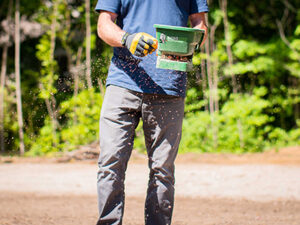
Spread seed

Spread evenly at the rate recommended for your specific variety.

Lightly raking a seeded bed

4

Lightly rake

Lightly rake in seed and fertilizer, mix the
seed within the 1/4 inch of soil.

Mulching newly seeded lawn

5

Apply mulch

Spread EZ-Straw® Mulch, PennMulch®, loose hydromulch, or straw blanket to protect and enhance establishment.

Watering a new lawn

6

Water

After seeding, water frequently but light (10-20 minutes). This would be 2 to 3 times per day, depending on how hot and dry the weather is. Continue this frequent watering for 10 days to 2 weeks. Ryegrass should be greening up by now.

After 10 days to 2 weeks, water 1 to 2 times per day, 30-45 minutes each. Bluegrass will start to germinate after about 3 weeks of water.

After 3-4 weeks, reduce the frequency of watering, but increase the length of time.

Fertilizing a new lawn

7

Repeat fertilizer

After 3-4 weeks, apply 3.5 lbs of 15-30-15 per 1,000 sq ft.

Repeat this for the first 3 months of establishment.

Mowing new grass

8

Mow

Mow the new grass as soon as it reaches 2″ with very sharp mower blades.

Cut off about 1/3 of the grass blade per mowing.

Take extra care not to tear up the new turf.

By mowing soon and often, the slower-growing Kentucky Bluegrass varieties will have a much better opportunity to fill in.

Found the right product for your next job?

TAKE THE NEXT STEP WITH RHINO SEED.

Locate a dealer and get the products you need to move forward.